


Your bed doesn’t just support you during the night. It manages pressure, heat, movement, and body alignment. If these elements aren’t properly controlled, your sleep becomes unstable, leading to micro-awakenings and less effective recovery.
You lie down. You find your position. And you fall asleep.
At that point, it feels like everything stops. But in reality, your bed goes to work.
For several hours, it interacts with your body, responds to your movements, and absorbs your heat… or traps it.
And that’s exactly what determines whether your sleep will be truly restorative or not.
Sleep is not static
We often think of sleep as a motionless state. But your body is constantly adjusting.
Why do you move during the night?
Because your body is trying to reduce discomfort.
Throughout the night, your body:
- changes position
- redistributes pressure
- regulates temperature
- moves through different sleep cycles
Your bed needs to follow these changes. Otherwise, your body compensates.
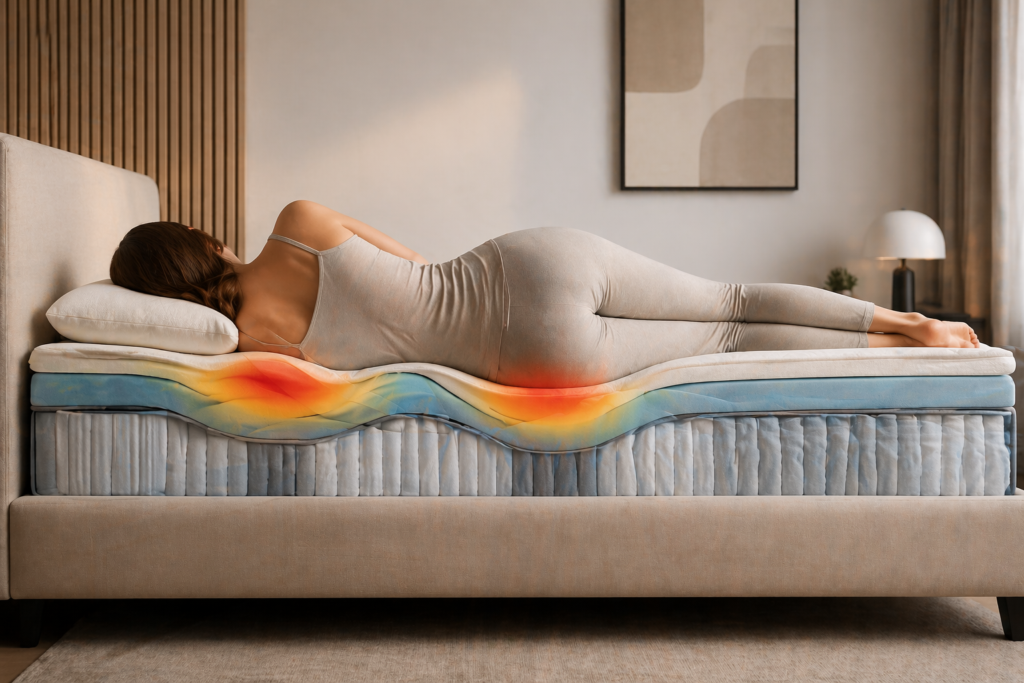
1. It manages (or fails to manage) pressure
Over time, certain areas carry more weight:
- shoulders
- hips
- lower back
Why do some mattresses cause micro-awakenings?
Because they concentrate pressure instead of distributing it.
Result:
- increasing discomfort
- frequent repositioning
- fragmented sleep
2. It accumulates (or dissipates) heat
Your body produces heat all night long.
Why do you feel hotter after a few hours of sleep?
Because some materials trap heat and limit airflow.
When heat builds up:
- you move more
- you partially wake up
- deep sleep decreases
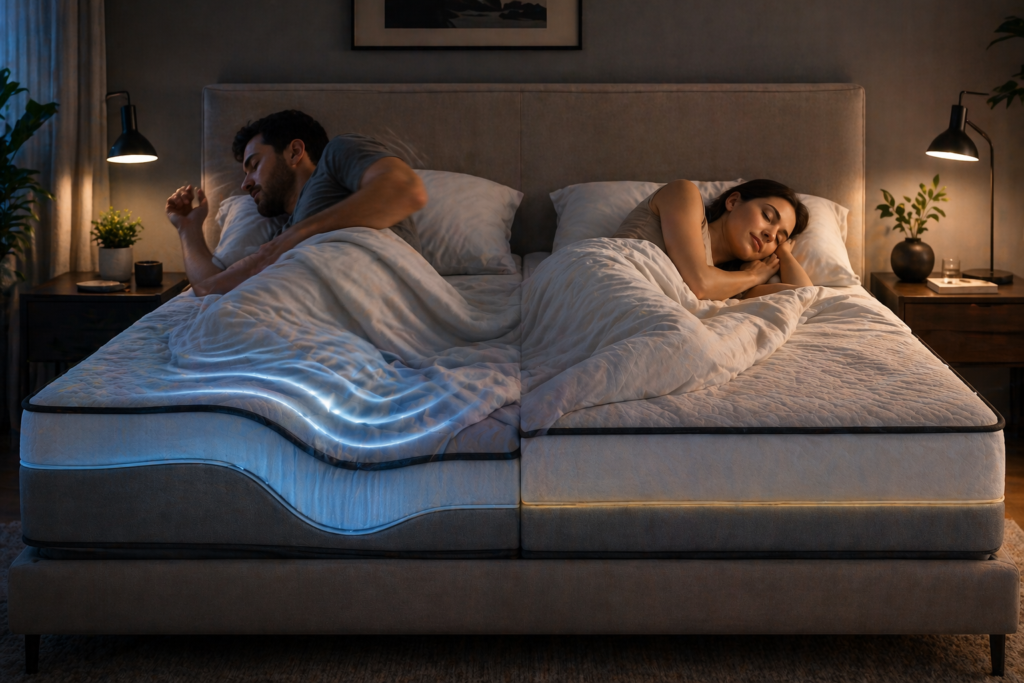
3. It reacts to every movement
You don’t stay still all night. Every movement creates a reaction.
A good sleep system:
- absorbs movement
- stays stable
- limits disturbances
A poor one:
- amplifies motion
- forces your body to readjust
Why does this matter?
Because even unconsciously, your body is working to stabilize itself.
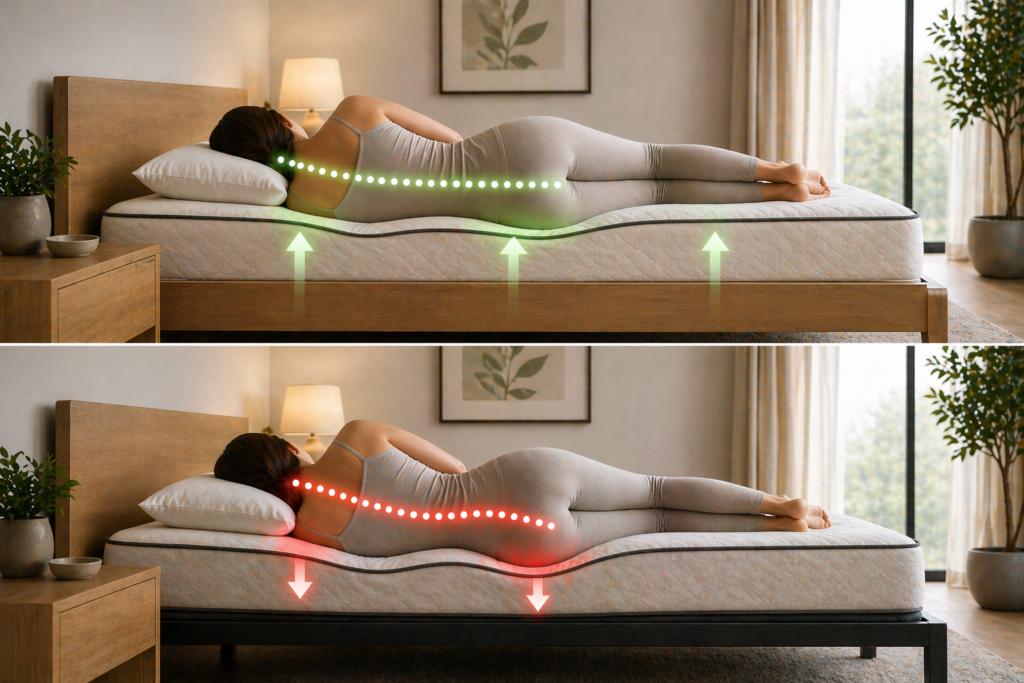
4. It maintains your alignment… or breaks it
Your position naturally shifts over time.
Why is alignment important during sleep?
Because poor support forces your muscles to compensate all night long.
Possible effects:
- tension
- discomfort
- reduced recovery
5. It influences your surrounding environment
Your bed doesn’t function in isolation.
It works with:
- the bed base
- airflow
- surrounding materials
A poorly ventilated mattress or inadequate base can trap heat and moisture.
A mattress needs to breathe to remain effective over time.
The challenge: everything happens gradually
Why does your sleep sometimes feel worse without a clear reason?
Because:
- pressure slowly increases
- heat builds up
- comfort declines
- micro-awakenings accumulate
Nothing is sudden. But everything adds up.
How to know if your bed is doing its job
Ask yourself:
- Why do I move so much at night?
- Do I feel warmer after a few hours?
- Do I wake up without a clear reason?
- Do I feel worse in the morning than when I went to bed?
If the answer is yes, your bed may not be supporting your body properly.
In summary
During the night, your bed:
- distributes your weight
- manages your temperature
- absorbs your movements
- maintains your alignment
- influences your environment
It’s not passive.
It’s an active system working for hours.
And that’s often where the difference lies between an average night… and a truly restorative one.
FAQ
Why do I move so much during the night?
Usually due to discomfort related to pressure, heat, or support. Your body is trying to find a better position.
Is it normal to wake up without a reason?
Yes, but if it happens frequently, it may indicate an issue with comfort or your sleep environment.
Can a mattress affect deep sleep?
Yes. An inadequate mattress can cause micro-awakenings that prevent stable deep sleep.
Why do I feel hotter in the middle of the night?
Because body heat accumulates and some mattresses limit heat dissipation.
Does the bed base impact sleep quality?
Yes. It affects both support and airflow, which directly influence comfort and temperature.