When choosing a bed, we tend to notice its style, fabric and height. We are less likely to look underneath. Yet leg placement plays a role in how the bed supports the mattress and the people who use it.
At Beaudoin, this layout is part of the design process. To determine where the legs should go, we consider a simple reality: a bed is used for more than sleeping.
Think about sitting on the edge to put on your socks in the morning. That everyday movement is something we need to plan for, too.
Sitting on the Edge Changes How Weight Is Distributed
When you are lying down, the mattress distributes your weight over a larger area of the bed. When you sit on the edge, that weight becomes more concentrated in one spot.
You probably have your routines, too. Whether you are getting up, getting dressed or settling in for the evening, chances are you often use the same side and the same spot on your bed. That area is therefore subjected to repeated pressure day after day.
When designing a bed, we need to account for these different situations. The structure must support the sleeper throughout the night while also handling everyday use along the sides.
The Number of Legs Does Not Tell the Whole Story
It might seem that adding more legs is all it takes to make a bed stronger. However, the number of legs alone does not tell us how well the bed is supported. Their placement and how they connect to the frame matter as well.
At Beaudoin, we examine how weight is distributed across the bed to determine where support points are needed. We pay attention to the hip area, which carries a significant portion of the sleeper’s weight, as well as places where someone might sit.
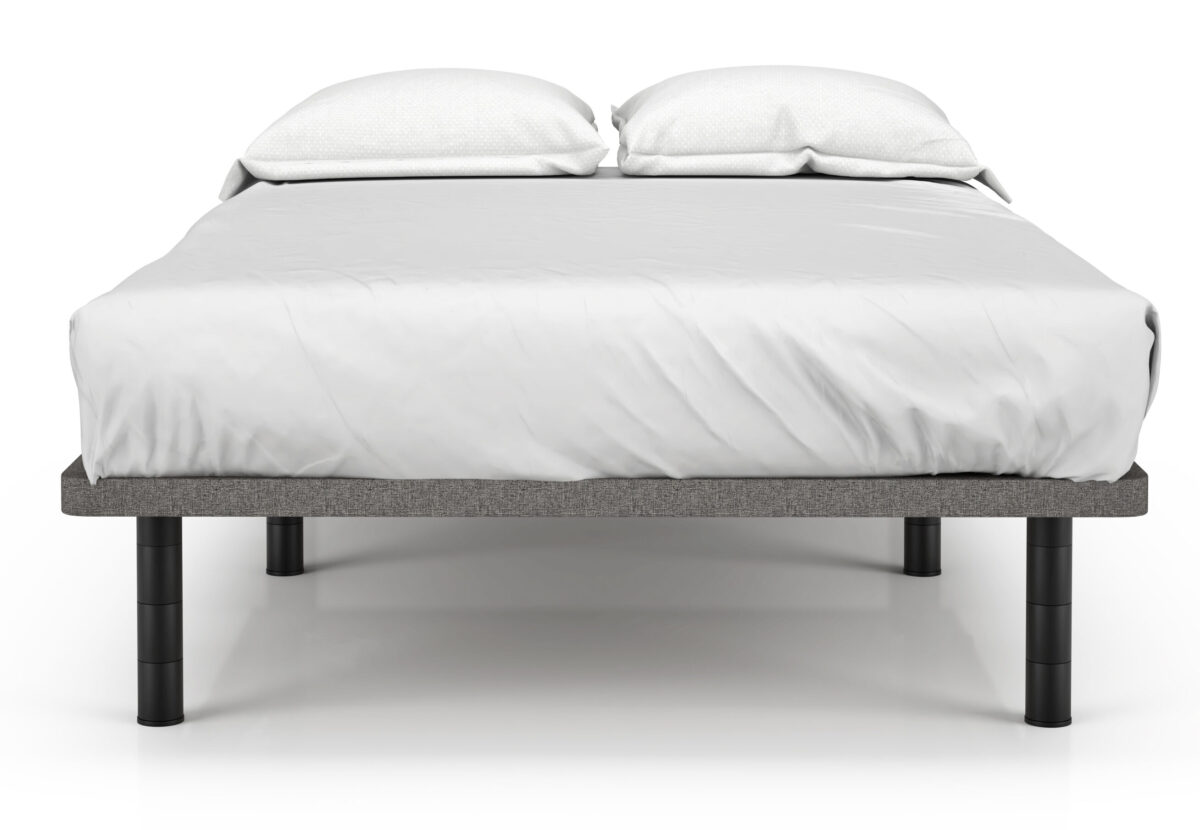
This guides the placement of legs in the centre and at various points between the head and foot of the bed. Each support point is considered as part of the overall design.
What Connects the Legs Matters, Too
The legs support a structure made up of several components. The surface beneath the mattress, the wooden perimeter framing that adds rigidity, and the connections between components all contribute to the bed’s strength.
We pay particular attention to joint placement. We aim to avoid positioning joints in areas subjected to high pressure. When a joint is necessary, we make sure it is properly reinforced.
Leg placement is therefore planned alongside the rest of the construction. Considering these elements together helps us determine how the bed will support weight during everyday use.
Putting the Design to the Test
The work continues with strength testing. Using a machine, we apply repeated pressure at several points on the bed, including around the perimeter, midway between the head and foot, and in the hip area.
These tests allow us to check how the different parts of the bed withstand repeated pressure. We assess the mattress support surface, the reinforcements and the leg layout.
The goal is to put our construction choices to the test by reproducing some of the pressures the bed will experience during everyday use.
Design Choices That Matter Every Day
You probably will not notice the leg placement when looking at your bed. Yet this detail is part of the work that happens long before the bed arrives in your bedroom.
At Beaudoin, we think about how you will use your bed: for sleeping, of course, but also for sitting on the edge in the morning or settling in at night. These simple movements guide our design choices, from positioning the legs to reinforcing the joints, to provide sturdy support every day.
This article draws on the knowledge and experience of the Beaudoin team. Artificial intelligence was used to help structure and draft the text.