


Waking up drenched in sweat. Searching for the cool side of the bed. Flipping your pillow to find a hint of freshness.
If this sounds familiar, you’re not alone.
Nighttime overheating is one of the most common causes of disrupted sleep. And contrary to popular belief, it’s not just about room temperature. In many cases, the issue comes from the bed itself.
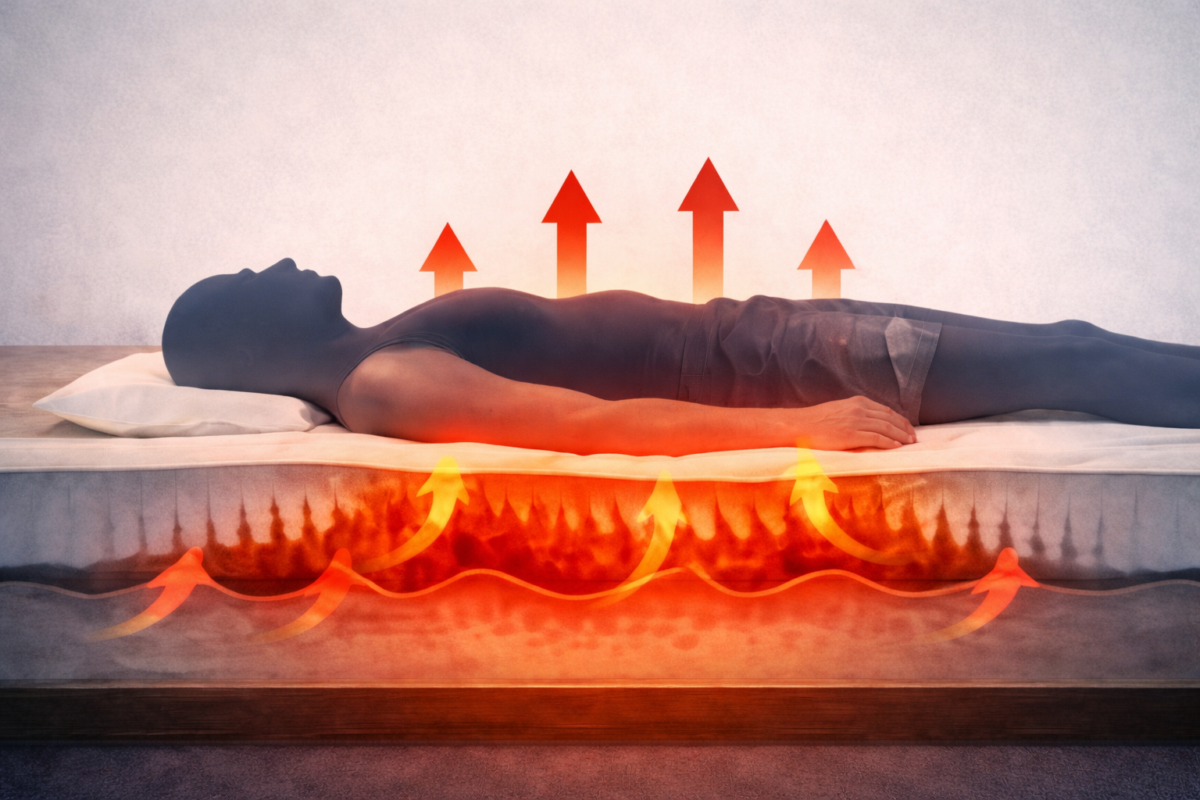
Why do you feel hot at night?
1. Your body naturally produces heat
During the night, your body temperature fluctuates. Certain sleep phases slightly increase heat, and your body tries to regulate it by releasing moisture.
If that heat gets “trapped,” discomfort sets in.
2. Your mattress materials retain heat
Some mattresses, especially those designed to feel very enveloping, can restrict airflow.
Result:
- Heat builds up
- Moisture gets trapped
- The surface becomes warmer over time
Even if the mattress feels comfortable at first, it can become stifling during the night.
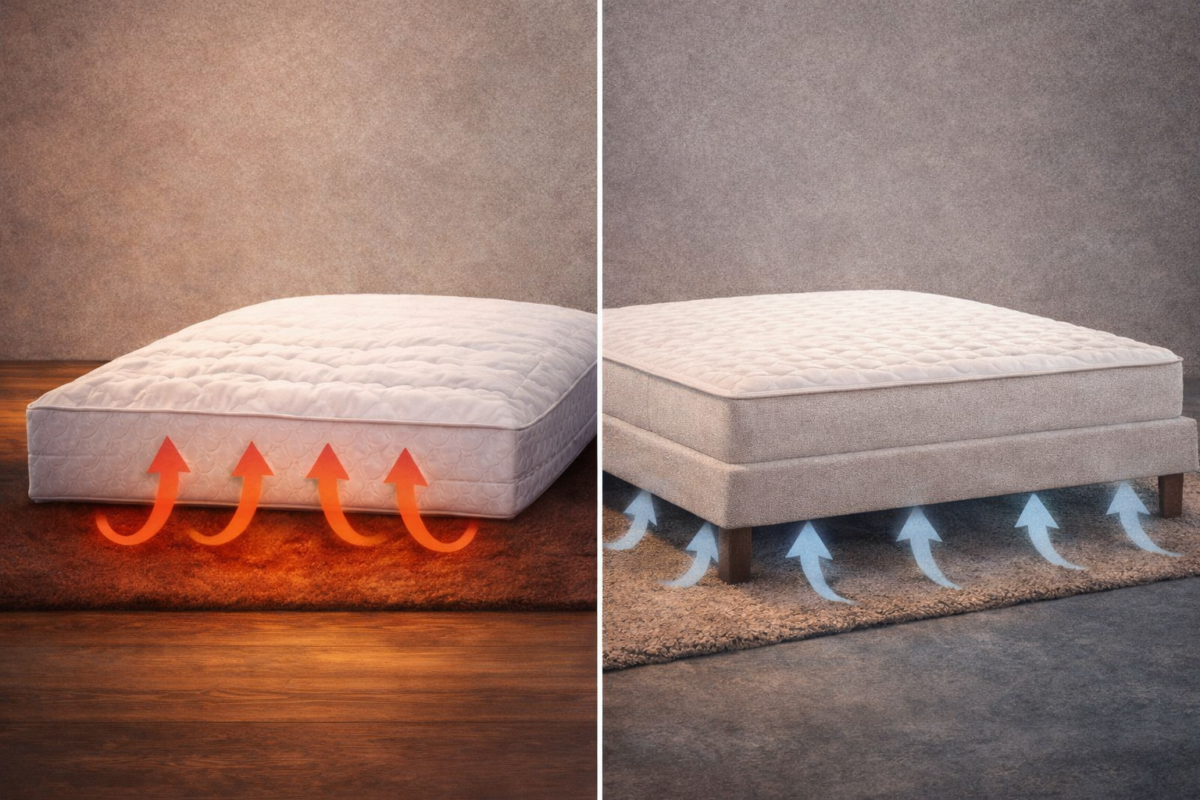
3. Poor bed ventilation
This factor is often overlooked, but it’s critical.
A mattress needs to breathe. If it sits too close to the floor or on an unsuitable base, airflow is limited, encouraging heat and moisture buildup.
4. Your bedroom environment
The ideal sleep setup is cool and dark.
A room that is too warm, poorly ventilated, or cluttered can amplify the feeling of heat, even with a good mattress.
Why heat disrupts your sleep
Sleeping in an environment that’s too warm is more than just uncomfortable.
It can lead to:
- Frequent awakenings
- Reduced deep sleep
- Feeling tired upon waking
- Less effective recovery
Your body needs to cool down slightly to fall asleep and stay asleep. When this process is disrupted, sleep quality suffers.
How to reduce heat at night
Here are the most effective levers, from simplest to more structural.
1. Adjust the room temperature
- Aim for a cool room (around 16 to 18°C)
- Air out the space before bedtime
- Avoid direct heat sources near the bed
This is the foundation, but rarely enough on its own.
2. Choose breathable bedding
Sheets and textiles play a significant role.
Prioritize:
- Natural fibers (cotton, linen)
- Moisture-wicking fabrics
- Seasonal bedding
3. Check your bed base
A well-designed base promotes airflow under the mattress, helping reduce trapped heat and moisture. Platform or well-ventilated bases typically offer a better balance between support and breathability.
4. Choose the right mattress
Not all mattresses handle heat the same way.
Consider:
- Airflow capacity
- How it responds to pressure (compression vs. distribution)
- Materials used
A good mattress should not only feel comfortable at first, but remain temperature-stable throughout the night.
5. Optimize your overall environment
Good sleep depends on multiple factors:
- A clean, uncluttered bedroom
- Proper air circulation
- A space dedicated to rest
Even simple elements like clutter or air quality can influence how warm you feel.
In summary
Overheating at night isn’t inevitable.
It’s often the result of an imbalance between:
- Your body
- Your mattress
- Your bed base
- Your environment
By adjusting these elements, you can regain a more stable, deeper, and more comfortable sleep.